What roof noises and other signs can tell you
Scratching, movement at dusk, droppings seen near a hatch or damage around an eave can prompt a roof cavity inspection. Sound alone cannot reliably distinguish rats, mice, possums, birds or movement in the building fabric. Time of day and where the noise is heard can help guide an assessment, but they are not a species diagnosis. Record the pattern from the occupied rooms and photograph accessible exterior signs without climbing or approaching animals.
A roof cavity can also be relevant to a timber pest inspection where safe access allows examination of visible timber. That is a different objective from simply finding the source of a noise. Explain the concern when requesting a quote so the provider can confirm the right skills and reporting scope. An inspection is not an electrical safety check, a roof leak certification or a structural engineering report. Where several issues overlap, the report should explain which need another trade rather than implying one visit resolves everything.
Ceiling access and safe movement
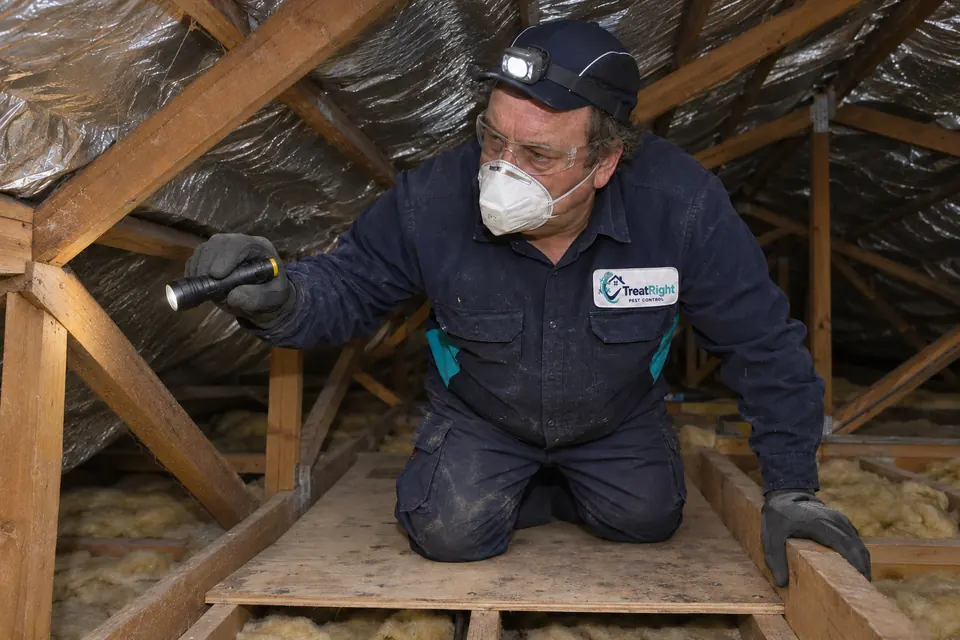
Ceiling linings are not walking surfaces. Safe access requires assessment of the hatch, suitable support, clearances, temperature and hazards inside the cavity. The attending professional must decide whether entry is appropriate and which areas can be reached. Never climb into a roof space to imitate an inspection or walk across unsupported ceiling material to improve the view.
Tell the provider about known electrical issues, damaged ceilings, recent renovations, insulation work or water entry. Do not move electrical cables, disconnect equipment or dismantle fittings yourself. If access requires electrical or building work, engage the appropriate qualified trade. High temperatures, animal waste, fragile materials and limited working space can change what is possible on the day. Recording a limitation is a responsible outcome when entry is unsafe. Ask whether an alternative observation method or later visit after a hazard is resolved would help.
Looking for evidence without assuming the cause
The inspection may consider accessible droppings, nesting materials, gnawing, entry routes and visible timber condition within the agreed scope. Evidence can be old, and more than one animal may have used a space over time. Identification should consider several observations rather than treating every dropping or sound as conclusive. A proposed management plan should explain the likely pest, confidence in that identification and any need for monitoring before treatment.
Possum management requires a different response from rodent control. In South Australia, permit conditions govern capture and release of possums, including on-property release requirements. Rodent bait should not be placed as a casual response to an unidentified roof noise. Non-target wildlife, children, pets and the risk of animals dying in inaccessible places all need consideration. If evidence suggests a protected animal, the provider must confirm the appropriate permit and lawful method before work. Closing a suspected entry point without checking occupancy can trap animals or dependent young inside.
Preparing for a roof-space inspection
Make the room beneath the access hatch available and move small movable items away from the work area if requested. Do not lift a damaged hatch, remove insulation or clean droppings to prepare for the visit. Keep children and pets out of the immediate area. Let the provider know whether access is through a shared area, a wardrobe or a tenanted room so permissions and practical arrangements can be settled before arrival.
Share roof repairs, solar or electrical work, animal sightings and previous treatment records. If there is a known history of possums or rodents, explain when activity last occurred and whether any openings were sealed. This history can be more useful than a guess about species. Avoid using repellents or pesticides in the cavity while waiting for assessment. Product use in enclosed spaces is not interchangeable with outdoor application. The inspection should establish the next step, including whether cleaning, exclusion or specialist repairs need a separately agreed plan.
Reporting, exclusion and follow-up
A useful report describes where the inspector could safely observe, the evidence found and the limitations of the inspection. Photographs should be explained in context. An image of a small section of roof timber does not demonstrate the condition of the whole roof. If activity is uncertain, monitoring can be a sensible recommendation rather than immediately choosing a poison or trap. Ask who will review monitoring results and how the plan changes if the suspected animal is not confirmed.
Exclusion repairs should follow a lawful occupancy assessment and suitable timing. Roof work may require a roofer or builder, particularly where access is elevated or materials are fragile. Pest advice can identify a suspected route without certifying a repair design. Cleaning animal waste is also a separate risk assessment and should not be treated as a household sweeping job. Agree whether treatment, cleaning, repairs and follow-up are included or separately quoted. Retain the inspection record so later trades know what was observed and what remains unresolved.
What determines availability and price
Roof cavity size, hatch location, height, heat, clearance, hazards, reporting requirements and the suspected pest all affect the scope. A simple accessible inspection is different from an investigation requiring return visits or coordination with another trade. We do not publish a fixed roof-space price or imply that general pest treatment automatically includes it. The quote should explain what happens if safe entry is not possible and what information can still be provided.
TreatRight intends to use independent local licensed partners rather than employee technicians. Relevant licences, endorsements, permits and current insurance must be checked for the actual work before allocation. Adelaide availability depends on postcode and partner confirmation; this draft is not accepting bookings. Any later pesticide application must follow registered product directions and site-specific precautions. No general claim that a roof treatment is harmless to every household or animal is appropriate. The proposed general pest warranty (terms apply) does not establish cover for unidentified roof noises, wildlife management or building repairs.
Coordinate building trades around the findings
Roof-space investigations often involve more than one provider. A pest technician may identify an apparent entry route while a roofer determines how to repair it safely and preserve weatherproofing. An electrician may need to assess damaged wiring before further access. Ask who will coordinate the sequence so a repair does not hide evidence or confine an animal.
When sharing the report, include the access limitations and photograph descriptions rather than forwarding an isolated image. Later trades need to know whether a finding was confirmed or only suspected. If the cavity could not be entered, do not describe the report as a full roof-space clearance. Keep a record of completed repairs and any further noises or sightings. That record helps decide whether follow-up should focus on the same route, another animal or an unrelated building issue. It also reduces the temptation to repeat treatment without checking whether the original explanation was correct.
Frequently asked questions
Can I enter the roof to take photos?
Do not enter a roof space for this purpose. Photograph safe exterior signs or describe noises from occupied rooms. A professional must assess access and hazards before entering.
Are roof noises always possums?
No. Rodents, birds, possums and building movement can produce confusing sounds. Identification should use evidence and sometimes monitoring before a control method is selected.
Will the visit include repairs?
Only if expressly agreed and performed by an appropriate provider. Roof repairs, electrical work, cleaning and pest management have different scopes and should be clearly separated in the quote.
Can entry holes be sealed immediately?
Only after occupancy and lawful management requirements are considered. Sealing an occupied space can trap animals or dependent young and may create further welfare and building problems.