
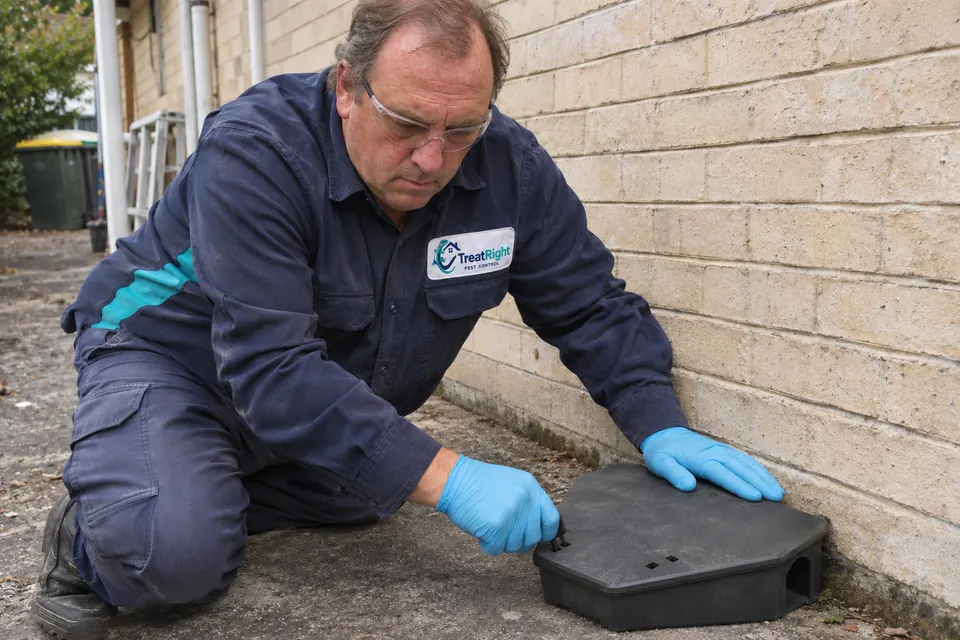
Rats, mice and evidence of activity
Droppings, gnawed packaging, scratching and damaged stored goods can indicate rodents. Size and location of evidence may help identification, but a single observation is not enough to establish species or population. Roof noises can also have other causes, including possums, which require a different lawful response. Record where and when activity occurs without touching waste or entering a roof cavity. Photographs taken from a safe accessible location can support the assessment.
Tell the provider whether activity is in a kitchen, garage, roof void, commercial storeroom or garden. The route between food, water and shelter can matter more than the room where you first noticed a problem. Deliveries, pet food, open bins and gaps around services are relevant observations. Rodent control is not a judgement about housekeeping. Even a well-maintained property may have an entry route or receive infested goods. The aim is to identify the drivers and match control methods to the site.
Inspection before choosing baits or traps
An assessment should consider likely species, fresh versus old evidence, access routes, food sources and the people and animals using the property. An unexplained noise is not sufficient reason to place poison in a roof. Children, pets, wildlife and neighbouring properties influence the method and placement. The plan should explain where monitoring is needed and whether physical traps, secured bait stations, exclusion or a combination is appropriate.
Baits must be used according to registered product directions and the site assessment. Secured stations help restrict access, but they do not justify a claim of zero risk. Ask how stations will be positioned, identified and checked, and what to do if one is moved or damaged. Loose bait placed casually where non-target animals can reach it is not an acceptable substitute for a designed program. Do not add your own bait or move stations between visits. That can change exposure risks and make monitoring records unreliable.
Non-target animals and secondary poisoning
Rodenticides can create risks beyond the rodent that consumes them. Pets and wildlife may be exposed directly or through poisoned prey, depending on the product and circumstances. The provider should consider these risks when selecting a method and explain the precautions relevant to the property. A blanket claim that a bait is pet-safe would be misleading. Tell the technician about working animals, free-ranging poultry, native wildlife and pets likely to hunt or scavenge.
Ask what monitoring and retrieval arrangements apply and who to contact if exposure is suspected. Product and incident information should be available through the provider; this page does not give veterinary or medical treatment instructions. If a station is damaged, keep people and animals away and seek prompt advice. Do not handle bait or carcasses based on an internet recipe. The program should include site-specific instructions for incidents and waste, recognising that contaminated areas and dead animals may need a separate professional response.
Exclusion, food and shelter changes
Control methods work best when paired with practical changes that reduce access to food, water and shelter. Secure food and animal feed in appropriate containers, keep bins managed and report leaking plumbing. Avoid leaving pet food available overnight where that is practical for the animal’s needs. Reduce clutter around accessible edges without disturbing hazardous waste. These changes support a program but do not prove that all rodents have gone.
Entry repairs need assessment. Gaps around doors, damaged screens and service penetrations can be relevant, but sealing an occupied space without considering the animal can create problems. Elevated roof repairs, electrical damage and structural openings belong with suitable trades. Ask the pest provider which repairs are priorities and which require another professional. In a multi-unit property, coordinated action may be needed because rodents can move through shared spaces. One tenant cannot authorise treatment or repairs across every part of a building.
Monitoring and aftercare
A useful program defines how activity will be checked and when results will be reviewed. Station records, fresh evidence and trap observations can help distinguish declining activity from a problem that has shifted elsewhere. The timeline depends on the site, species, food competition, method and access. A promise that every infestation will end after one visit would ignore those differences. Ask what the first visit includes and how additional attendance is quoted.
Do not clean potentially contaminated waste by dry sweeping or follow hazardous cleanup instructions from a general marketing page. Request a site-specific cleaning plan and suitable professional advice where needed. Keep children and pets away from affected areas. Preserve treatment records and tell the provider if activity changes or a station is missing. An odour after control requires assessment, particularly if a dead animal may be inaccessible. Odour removal, repairs and sanitation may be separate services rather than automatic inclusions in the initial control fee.
A quote that explains the full program
The property layout, evidence, infestation extent, access, station needs, inspection frequency and exclusion work affect price. A residential garage is different from a food business with stock rooms and loading docks. The quote should identify target pests, planned methods, visit arrangements, records and exclusions. Ask who owns or maintains installed equipment and what happens if a station needs replacement. We do not publish an invented fixed rodent price or treat it as automatically included in general pest spraying.
TreatRight intends to allocate field work to independent local partners after the required licensing and current insurance checks. No already-verified team is claimed. Adelaide postcode availability and partner suitability must be confirmed before a booking can be offered. This is a preview and enquiries are not sent. Any service terms must match the actual rodent program; the proposed 6-month general pest warranty (terms apply) does not automatically apply. Consumer rights remain relevant, and a written plan should explain both practical responsibilities and the provider’s follow-up obligations.
What to record between visits
A simple activity log can include the date, room, type of evidence and whether food or packaging was affected. Avoid handling droppings or moving devices to produce evidence. If a sighting occurs outside the previously affected area, note the route and any recent deliveries or building work. These details help the provider reassess movement without relying only on how worried the household feels.
Tell the provider promptly about missing stations, damaged equipment or a change in the animals using the site. A new puppy, visiting child or free-ranging poultry can alter exposure considerations. Also report repairs that close an access route, because the monitoring pattern may change afterwards. Keep treatment records available if a different provider becomes involved. Without that history, an additional service may unknowingly duplicate products or misinterpret old evidence as current activity. A useful program makes communication and review part of the scope rather than an afterthought.
Frequently asked questions
Is one bait station enough?
That depends on the evidence, building layout, target species and product directions. Station number and placement should follow assessment, with monitoring rather than a guess based only on property size.
Are secured baits safe for pets?
Secured stations restrict access but do not eliminate all risk. Tell the provider about pets and wildlife so direct exposure and secondary poisoning risks can be considered in the method and precautions.
Can I seal every hole first?
Discuss sequencing with the provider. Exclusion matters, but occupancy, alternative routes and building safety need assessment. Electrical, roof and structural repairs may need other qualified trades.
Does a rodent visit include waste cleanup?
Only where expressly agreed. Contaminated material, carcass retrieval and sanitation require a separate risk assessment and may need a separately scoped professional service.