
Recognising a reason to arrange an inspection
Mud-like shelter tubes, damaged timber, discarded wings or unexpected changes around a skirting board can justify a timber pest assessment. None of these observations alone proves the extent of an infestation. Some timber damage has other causes, and termite activity may be concealed behind finishes. If you suspect activity, leave the area undisturbed. Do not break open timber, pull away a mud tube or apply aerosol to see what happens. Disturbance can make assessment and management more difficult.
A routine inspection also has value when there is no obvious symptom. The purpose is to examine accessible areas and identify evidence and conditions that need attention. It cannot certify that every hidden part of the building is free of termites. Share previous reports, treatment records, renovation history and any durable notices you can safely photograph. An older report is useful background, but it does not establish current conditions. If you are buying, make the purpose and contract timing clear before appointing an inspector.
Routine and pre-purchase scopes differ
A routine termite inspection of an existing home supports ongoing management. A pre-purchase timber pest inspection is commissioned for a transaction and must have its own agreed scope, reporting basis and limitations. AS 4349.3 covers non-invasive timber pest inspections, including pre-purchase inspections; it is distinct from a building inspection and does not turn the report into a structural engineering opinion. Ask which timber pests are covered and which standard is being used rather than assuming that every inspection with the word termite is interchangeable.
The report recipient matters. A report commissioned by someone else may have contractual restrictions and may not answer your questions about access or timing. Ask whether you can rely on it and whether a fresh inspection is appropriate. Arrange building, structural or other specialist advice separately when needed. TreatRight’s proposed process must confirm a partner with the relevant timber pest endorsement and suitable insurance before allocation. It must also confirm the business licensing obligations for arranging the service before public bookings open.
How accessible areas are assessed
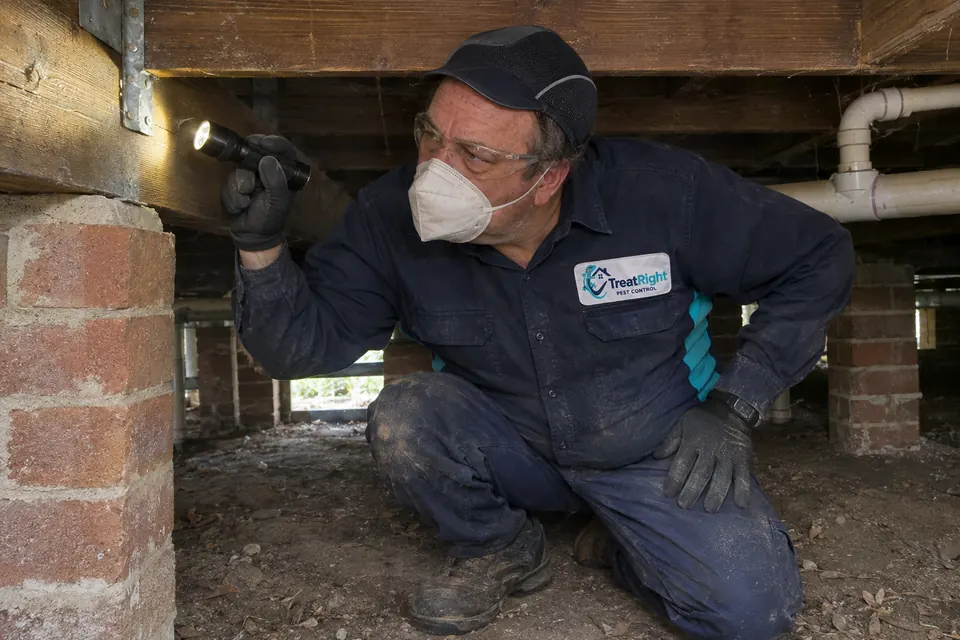
The inspector should explain the inspection method and access requirements before the visit. Accessible internal rooms, external edges, roof void and subfloor spaces may form part of the agreed scope, but physical access and safety determine what can actually be examined. Locked rooms, stored furniture, low clearances, insulation, finishes and dense vegetation can limit the view. A visual inspection is not permission to cut holes, remove fixed linings or dismantle the building.
Tools can assist an inspection without making hidden areas transparent. Moisture readings or other indications require interpretation and should not be presented as definitive proof by themselves. The report should distinguish observed evidence from suspicion and explain where further investigation is recommended. Safe access remains important even when the buyer is in a hurry. No one should walk unsupported ceiling material or enter an unsafe subfloor merely to avoid recording a limitation. If an important area is inaccessible, ask what a separate follow-up assessment would require.
Preparing without disturbing evidence
Unlock gates and rooms that are within the agreed scope. Make inspection points accessible where this can be done safely, and move small stored items away from wall edges if requested. Tell the provider about known electrical faults, damaged access hatches, aggressive animals, contaminated areas or structural concerns. Do not enter a roof cavity yourself to make the appointment easier. If access preparation needs a builder or electrician, arrange that work separately through an appropriately qualified person.
Bring existing system documentation together: installation records, product or system details, recharge dates, renovation plans and prior inspection recommendations. If you cannot find them, say so. Missing documents should not be replaced with guesses about system age or service life. Photograph suspected activity only from a safe position and record when you first noticed it. In a tenanted property, organise lawful access with the owner or agent. The inspector needs time to assess the site rather than being asked to inspect around an unannounced inspection or moving truck.
Reading the report and acting on findings
A useful report explains the agreed scope, accessible and inaccessible areas, findings, conditions conducive to attack and recommendations. Read the limitations as part of the result rather than skipping to a tick box. Evidence of damage may need a separate assessment of structural significance. An inspector can identify timber pest concerns without certifying the load-bearing capacity of damaged elements. Where further access is recommended, decide who will arrange it and whether timing affects a purchase decision.
Management recommendations should distinguish active infestation treatment from future risk management. A chemical soil treatment, physical system, reticulation arrangement or bait monitoring program serves a different role and may have ongoing obligations. Do not assume that a treatment quote is included in the inspection fee. Inspection frequency should respond to the property, system requirements and risk; annual inspection is common advice, not a universal legal interval or a guarantee that attack cannot occur between visits. Set reminders based on the written recommendation and preserve the report with property records.
What changes the scope and fee
Price depends on the property, inspection purpose, size, construction, safe access, reporting requirements and any separately agreed investigation. A raised timber-floor home with limited clearance can take a different approach from a slab home with extensive landscaping. Detached buildings and multiple dwellings need to be identified in the quote. We do not publish a universal inspection price because a meaningful comparison requires the same scope and report basis.
Ask whether roof and subfloor access are included when safe, what happens if they are inaccessible, how reports are delivered and whether discussion of findings is available. Urgent contract deadlines do not remove safety or licensing requirements. TreatRight’s availability remains subject to postcode and appropriate partner confirmation. This local preview does not accept bookings. General pest pricing and the proposed service warranty (terms apply) do not apply to timber pest inspections as an assumed package. Obtain written terms for the actual inspection, and seek independent advice on purchase-contract rights or deadlines where necessary.
Questions for a property transaction
Before commissioning a purchase-related inspection, confirm the property address, buildings included, intended report recipient and deadline. Ask whether the inspector can discuss findings before a contractual decision is due, while recognising that the written report remains essential. An urgent phone summary should not replace reading the limitations and recommendations.
Where access depends on an agent, seller or tenant, organise it early. A locked garage or blocked hatch can leave an important question unanswered. If the report recommends further investigation, check whether that can be completed within your transaction timeframe and seek independent advice about contractual implications. The inspector should not be expected to decide whether you should buy the property. Its role is to provide the agreed technical observations and recommendations; your financial, legal and building decisions may require other advisers. Preserve the complete report rather than sharing only a reassuring sentence taken from it.
Frequently asked questions
Does a clear report guarantee no termites?
No. A report describes findings within its agreed scope and access limitations at the inspection date. Concealed activity and later changes remain possible. Read inaccessible-area notes and recommended further investigation carefully.
Should I spray suspected termites first?
Leave suspected activity undisturbed and seek an assessment. Household spraying or opening damaged timber can disrupt evidence and does not establish a management system for the property.
Is a building inspection enough?
A general building inspection and a timber pest inspection have different purposes. Confirm the reports you need, their standards and the qualifications of the people performing each task before commissioning them.
Can an inspector assess damage strength?
A timber pest report is not a structural engineering report. If damage may affect structural performance, seek appropriate building or engineering advice separately and follow recommendations about safe access.