
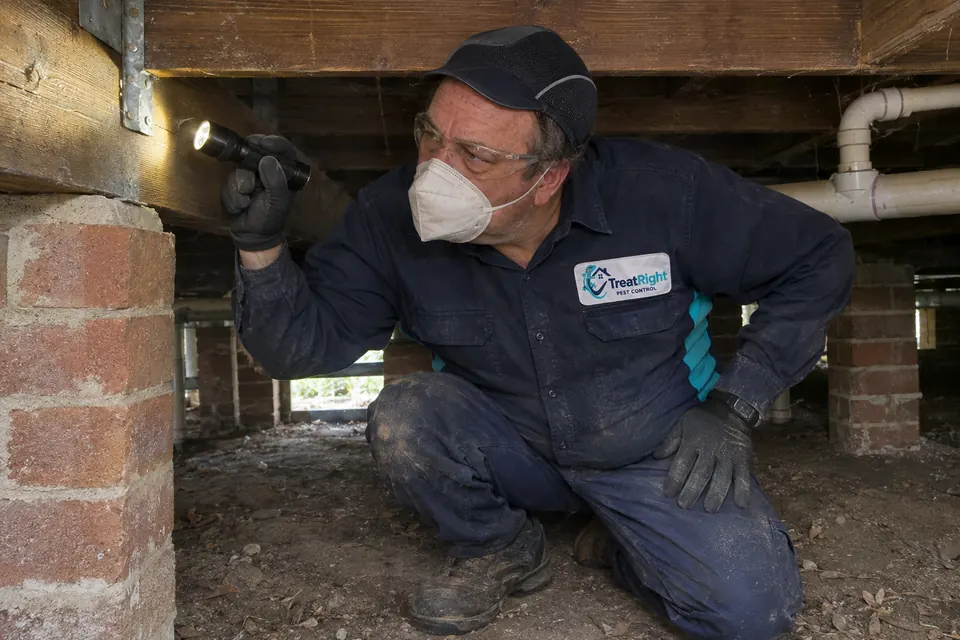
Why the space under the floor matters
A subfloor is more than an empty space under a house. It may contain timber supports, brick piers, plumbing, wiring, stored materials and evidence of changes made over many years. Inspection can help identify visible timber pest activity and conditions such as moisture or restricted ventilation that deserve further attention. The exact purpose should be agreed first: a focused pest inspection is different from a plumbing investigation or a structural assessment.
Tell the provider why you are concerned. A musty smell, visible dampness near a vent, timber damage or a previous report may suggest different questions. None of these establishes a diagnosis from the living room. A subfloor inspection should describe what can be observed within safe accessible areas and avoid turning an inaccessible space into a confident all-clear. It may form part of a broader timber pest inspection or be a separately scoped visit. Ask which arrangement applies so the report answers the question you are paying to investigate.
Access is an assessment, not an assumption
An external hatch does not guarantee that a person can safely inspect the entire subfloor. Clearance can vary across the building, and walls, ducts, pipes or extensions may divide the space. Standing water, exposed wiring, unstable materials, contamination and animals can prevent entry. The inspector must assess conditions before proceeding and may need to restrict the inspection. That decision should be recorded with the areas affected and any recommended next step.
Do not crawl under the home to test access for the technician. Do not move wiring, remove supports, cut openings or disturb suspected asbestos-containing materials. If an access improvement is needed, an appropriate building professional should assess it. Tell the provider about known hazards in advance and make the existing hatch available without dismantling the building. A narrow view through a hatch can sometimes provide useful observations, but it is not equivalent to a complete inspection of the space beyond it.
Moisture, ventilation and timber conditions
Visible leaks, damp ground, blocked vents and timber close to soil are useful observations to document. Moisture can have several sources, including plumbing faults, drainage problems or local conditions. A pest technician should avoid presenting every damp patch as proof of termites or promising that a treatment will fix the underlying cause. Further plumbing, drainage or building assessment may be needed. Photographs and a location description help those trades understand what was observed.
Ventilation advice must also fit the building. Simply adding a vent is not a universal solution, particularly where the layout, drainage or moisture source has not been assessed. Stored timber and debris may obstruct inspection or create shelter, but removal should be planned around hazards and safe access. Ask the report to distinguish observed conditions from possible causes. If timber damage is found, a separate assessment may be needed to determine structural significance. The pest inspection does not certify the strength of a bearer, joist or support.
What the inspection process should record
Before the visit, agree whether the task includes timber pest observations, moisture-related conditions, photographs and a written report. The inspector should identify accessible areas, limitations and any evidence requiring further investigation. Existing treatment records and earlier reports can help direct attention without replacing a fresh assessment. If activity is suspected, leave it undisturbed. Breaking tubes or spraying beneath the floor can complicate the evidence and expose people to hazards in a poorly ventilated space.
The report should be clear about the difference between no evidence observed and no possibility of concealed activity. Fixed flooring, insulation and enclosed sections can hide important surfaces. If additional access would materially change the assessment, ask what work is needed and who can safely undertake it. A follow-up inspection may need a separate scope after repairs or access improvements. Do not assume that an initial fee includes every later investigation, treatment or building repair. Those are different tasks with different responsibilities.
Preparing the property and following up
Provide the access location, available opening dimensions if already known, and a description of the floor construction without entering the space. Unlock side gates and keep pets away from the work area. Let the provider know about stormwater pooling, recent plumbing work, pest treatments or an extension that may have changed access. Avoid using the hatch area for storage in the days before the visit so the technician can assess it without moving heavy items.
Afterwards, prioritise recommendations by the issue they address. A leaking pipe needs a suitable plumbing response; unsafe electrical conditions require an electrician; suspected structural damage needs appropriate building advice. Pest management may need to proceed alongside those actions, but it does not replace them. Keep photographs and reports together and note when corrective work was completed. If a later inspection is recommended, ask what it is meant to establish and what must change first. This makes follow-up purposeful rather than a repetition of the same inaccessible view.
Scope, safety and cost factors
The size of the building is only one cost factor. Clearance, divisions within the subfloor, the number of access points, contamination, reporting needs and the purpose of the visit can affect the scope. A pest-focused inspection should not silently become mould certification, a building compliance certificate or a guarantee against future termites. Those claims require different evidence and sometimes different professionals. Ask the quote to state exclusions in ordinary language before agreeing to proceed.
TreatRight’s proposed subfloor work depends on Adelaide postcode availability and a suitable independent partner. Relevant licences, timber pest endorsement where applicable and current insurance must be checked before allocation. This preview is not taking bookings and does not claim a team has already passed onboarding. A general pest offer does not automatically include crawling beneath the floor. Any treatment following inspection needs its own approved method, product-specific precautions and written scope. Preserve consumer rights and ask about the actual service terms rather than relying on an unrelated general pest warranty (terms apply) proposal.
Make corrective work traceable
If the report identifies several issues, keep a simple action record with the location, recommended trade and completion date for each. A photograph of a repaired pipe can help demonstrate that the identified leak was addressed, but it does not establish that every moisture source has been resolved. Ask whether further observation is needed after conditions have changed.
Where stored materials block the view, agree a safe clearing plan and whether reinspection is useful. Do not treat the initial limitation as a permanent finding about inaccessible timber. Similarly, a builder’s repair to one damaged component does not remove the need to assess the pest issue that prompted the repair. Coordinating those tasks helps avoid a cycle in which repairs conceal evidence before management has been considered. The inspection record should remain available to later trades so each understands what was actually observed and which questions still require attention.
Frequently asked questions
Will you enter every subfloor?
Only where the attending provider assesses access as safe and suitable. Low clearance, water, electrical hazards, contamination or structural concerns may limit entry. Limitations should appear in the report.
Does dampness mean termites?
No. Dampness has several possible causes. It can be a condition relevant to timber pest risk, but diagnosis requires assessment and may involve a plumber or building professional.
Can this replace a structural inspection?
No. A pest-focused subfloor inspection does not certify timber strength or the adequacy of foundations. Seek appropriate structural advice if damage or movement raises concern.
Should I clear everything underneath first?
Do not enter a hazardous space or disturb suspected activity. Discuss preparation from outside the subfloor and arrange any necessary clearing or access work through suitable professionals.