
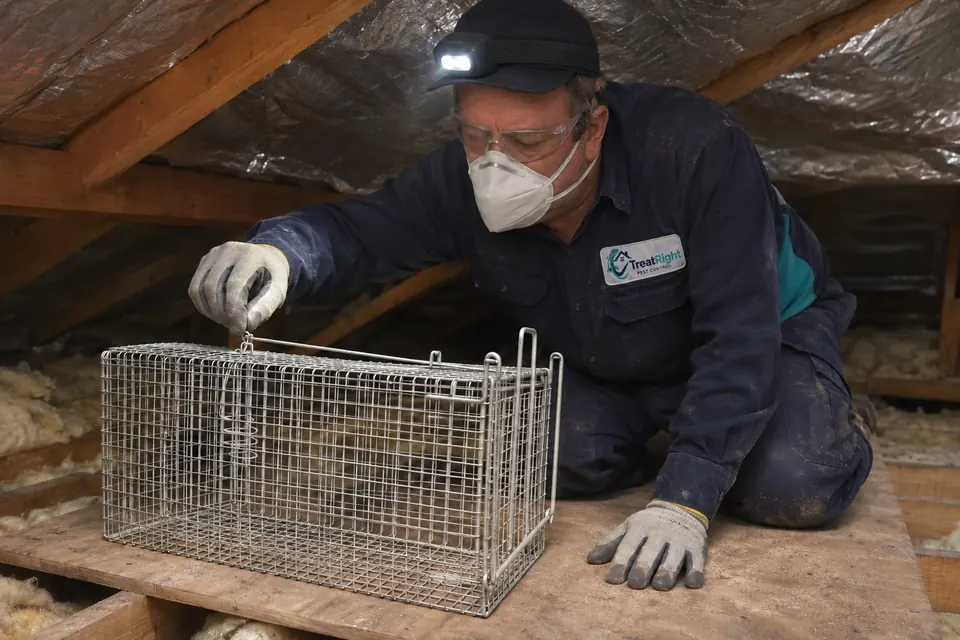
Identify the visitor before choosing a response
A heavy thump above the ceiling, movement around dusk or an animal on the fence can suggest a possum, but roof noise alone is not proof. Rats, birds and other causes may need different responses. Observe from a safe place, record the timing and describe any visible entry route without climbing or approaching the animal. Do not open a roof space to chase the visitor or place an improvised trap to confirm what it is.
Possums are native wildlife, not an ordinary crawling-insect treatment target. The objective is to address the conflict lawfully while protecting animal welfare and preventing repeated access to the building. A useful assessment considers the animal, the structure, likely entry routes and the possibility of dependent young. It also asks whether another pest has been misidentified. TreatRight’s proposed service depends on an appropriately authorised independent provider and confirmation of the current permit conditions before any capture work is arranged.
South Australian permit and release conditions
South Australian guidance requires a permit or a permitted controller for possum capture and release. The permitted activity is not a general licence to remove wildlife from gardens. Trapping is restricted to built structures under the applicable conditions. Captured possums must be released on the same property, within 50 metres of the capture location, after dusk and within 24 hours. Current permit conditions prevail, so these details must be checked for the actual job.
Off-property relocation is not the service offered here. Driving a possum to a park or bushland is not a lawful substitute for the on-site release requirements described by the state guidance. A customer’s preference for relocation does not override permit obligations. Ask who holds the relevant authority, what it permits and how release and welfare will be managed. If the proposed circumstances do not fit the authorisation, work should pause for advice rather than adapting the law to fit the booking.
Inspection and an animal welfare plan
The provider should assess safe access, evidence of occupancy, possible entry routes and conditions affecting trapping or exclusion. Roof cavities can be hot, cramped and hazardous; not every space can be entered. An animal seen once does not reveal whether dependent young are present. That question matters before trapping or sealing an opening. The management plan should explain how occupancy is checked and what happens if the situation differs from the initial description.
Equipment, monitoring, timing and handling must follow the current authorisation and welfare requirements. Do not attempt a trial capture while waiting for a professional. A trapped animal creates immediate responsibilities that cannot be postponed until a convenient time. Tell the provider about pets, children, shared roofs and neighbouring access so the plan can manage those conditions without exposing people or wildlife to unnecessary risk.
Exclusion needs careful timing
Preventing re-entry is often central to resolving a building conflict, but repairs should happen only after ensuring no animals or dependent young remain inside. Simply blocking a noisy opening can trap wildlife in the cavity or separate young from a parent. The provider should explain the occupancy checks and the timing of any exclusion work. If repairs are needed at height or involve fragile roofing, an appropriate building trade may be required.
Ask which openings are within the agreed repair scope and whether other possible routes remain. A roof has many interfaces, and one visible gap may not be the only access point. Vegetation near the building, damaged eaves and adjoining structures may warrant discussion without being declared the cause before inspection. Repairs should suit the construction and avoid interfering with ventilation or other building functions. If a nesting alternative is considered, discuss its suitability and placement with the wildlife provider rather than treating it as a guarantee that the animal will choose it.
What to prepare and what to avoid
Provide a description of the noise pattern, photographs of safely visible exterior openings and any history of previous possum activity. Arrange permission for access in rented, strata or shared-roof properties. Keep pets away from the assessment area and tell the provider about dogs that patrol the proposed release area. Do not feed the possum to make it easier to catch, handle it yourself or use pesticides as a wildlife deterrent.
If you find an injured animal or one in distress, seek appropriate wildlife assistance rather than trying to turn a routine building-management enquiry into emergency animal care. This site does not provide veterinary treatment instructions. A safe distance protects both people and the animal. The provider needs accurate information about any earlier trapping, sealed openings or repellents used. If a previous repair coincided with a change in noise, record that timing. It can help identify whether an animal may have become confined and whether the situation needs a different response.
Scope, costs and a responsible outcome
Possum management pricing depends on identification, safe access, permit arrangements, monitoring, release logistics and exclusion repairs. A quote should separate assessment, any authorised capture process, follow-up and building work. Do not compare a wildlife service with a general pest spray solely on price. A lawful outcome may require more than a single short visit, and some circumstances may be outside the provider’s permit or practical capacity.
TreatRight is preparing a national subcontractor network with a Sydney head office. The relevant wildlife authority, pest licensing where applicable and current insurance must be checked before allocation. No current permit holder or already-vetted team is claimed by this preview. Availability is subject to postcode and suitable partner confirmation. The general pest from $199 proposal and proposed 6-month service warranty (terms apply) do not automatically cover wildlife work. Obtain the actual written scope and follow-up terms. A responsible plan explains what has been resolved, what repairs remain and what to do if new evidence of occupancy appears after the work.
Shared roofs and neighbouring properties
A possum may use structures across more than one property, while the permit’s release conditions still apply to the capture location. Shared roofs, strata buildings and adjoining garages can complicate permissions and exclusion work. Establish who can authorise access and repairs before arranging a visit. A neighbour’s agreement does not replace the provider’s legal obligations, and a lack of agreement does not permit offsite relocation.
Discuss how the provider will communicate an incomplete result if access or repairs cannot be arranged. It may be possible to identify likely activity without being able to complete the whole management plan. That limitation should be explicit. Keep pets away from the planned release area under the provider’s directions and do not attempt to influence the animal’s movement yourself. The objective is a lawful, welfare-conscious resolution to the building conflict, supported by suitable repairs, rather than a promise that native wildlife will disappear from the wider neighbourhood.
Frequently asked questions
Can you relocate a possum elsewhere?
No. The South Australian guidance requires release on the same property within 50 metres, after dusk and within 24 hours, subject to current permit conditions. Off-property relocation is not offered.
Can I trap one in the garden?
The guidance concerns permitted capture from built structures. Do not set a trap based on this webpage. Confirm current authorisation and conditions with the state environment authority or a permitted controller.
Will sealing the roof solve it?
Only when occupancy and dependent young have been properly considered. Sealing too early can trap animals. Appropriate exclusion repairs need a lawful management plan and safe building access.
Is an ordinary pest licence enough?
Do not assume so. Possum capture and release requires the relevant wildlife authorisation. The provider’s actual permit, conditions, applicable licences and insurance must be checked before allocation.