
Understand the spider and its setting
Spiders occupy many different niches around Australian homes. Webs near exterior lights, a spider in a shoe and a redback in a sheltered outdoor corner are different situations. Identification matters because behaviour, habitat and the appropriate response differ. A clear photograph taken without approaching or handling the spider can help an assessment. Do not try to provoke a bite, lift a spider by hand or assume colour alone settles the identification.
Useful information includes the location, whether there is a web, the frequency of sightings and the areas used by children or pets. An outdoor spider population does not automatically require treatment across the entire garden. Spiders also consume other insects. The purpose of a household service is to address the agreed concern and reduce relevant contact or shelter, not to promise a permanently spider-free property. Explain whether the concern is a particular sheltered area, repeated indoor encounters or a suspected medically significant species.
Redbacks and white-tailed spiders: accurate context
Australian Museum guidance describes redback spiders as capable of causing serious illness. Treat a suspected redback cautiously and avoid disturbing its web or shelter. This page is not a medical treatment guide. Seek medical assistance for concerning bites and use emergency services for an emergency. Do not use the business enquiry process as a source of urgent medical advice, particularly while this site is a local preview without live contact details.
White-tailed spiders are often associated with alarming stories about skin ulcers. The Australian Museum’s account of verified bite studies does not support a blanket claim that white-tailed bites cause flesh-eating ulcers. That does not mean every bite should be ignored or that a spider can be diagnosed from a skin lesion. Medical concerns belong with a clinician. A pest provider should describe observed spiders and practical management, not diagnose a wound or use unsupported medical claims to sell an intensive treatment.
Inspection and a targeted treatment plan
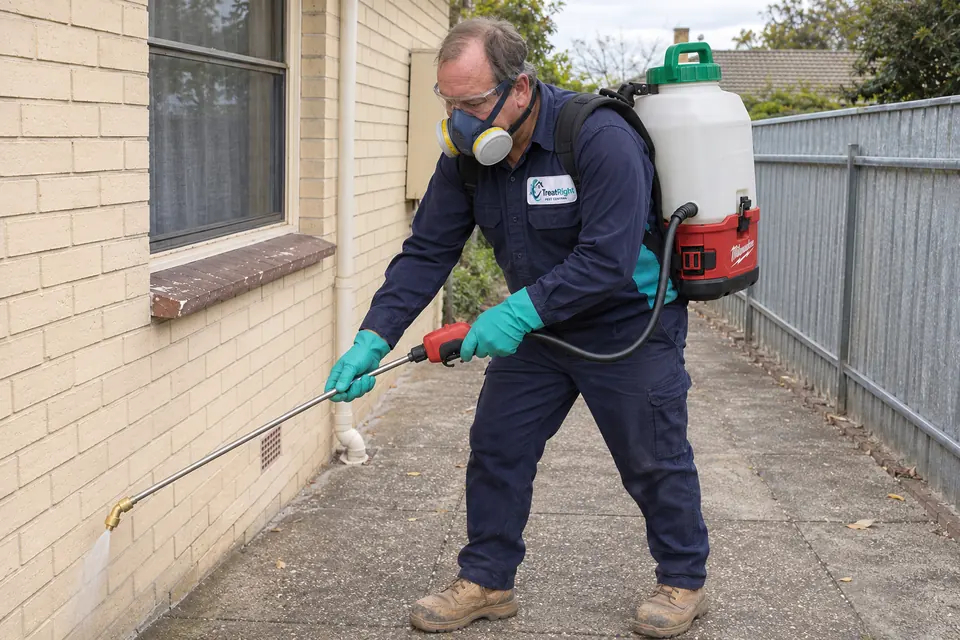
An assessment can consider accessible webs, sheltered outdoor edges, garage storage, door gaps and insect activity around lighting. The provider should distinguish species identification from general observations. A plan may include targeted treatment of suitable harbourage, removal of accessible webs where agreed and practical exclusion advice. Any product must be registered for the intended use and applied according to label requirements. Treatment of every flowerbed or every surface is not automatically appropriate.
Ask which areas are included and which cannot be accessed safely. High eaves, fragile roofs, dense vegetation and shared boundaries can affect scope. A general pest service may include nominated spiders only if that is written in the quote. Egg sacs, new arrivals and untreated shelter can influence later activity, so the provider should explain expectations and whether monitoring or a follow-up assessment is relevant. An instant visible reduction in webs is not evidence that every spider has been eliminated from the property.
Preparation for households and outdoor areas
Before the visit, discuss children, pets, aquaria, ponds, sensitivities and how outdoor spaces are used. Put away toys, food, pet bowls and other items from nominated treatment areas as directed. Make ordinary access available without reaching into hidden spaces or shifting unsafe stacks. Do not put your hands into a garage corner to remove a suspected spider before the technician arrives. A small preparation task is not worth unnecessary contact with an unidentified animal.
Stored shoes, gloves and outdoor equipment can be checked cautiously as part of everyday prevention, but handling a suspected dangerous spider is not preparation. Keep children and pets away from known activity and tell the provider where it was seen. Shared fences, courtyards and rental premises may require permission for access or treatment. Ask what can be completed within your property and what would require another owner’s agreement. The site plan should respect those boundaries rather than treating neighbouring space as freely available.
Aftercare and practical prevention
Follow product-specific re-entry and cleaning directions. There is no universal statement that every spider treatment is harmless after drying. Ask when outdoor play, pet access and routine cleaning can resume and which treated surfaces should be left undisturbed. Avoid applying household aerosol over a professional treatment unless the provider has advised it. If activity continues, record the location and timing so it can be compared with the original scope.
Reducing clutter, repairing screens and managing gaps can help limit shelter and entry. Lighting that attracts insects may also influence where spiders build webs, but any changes should suit the household and building. Garden vegetation touching the structure may warrant maintenance where safe. These measures support management rather than guarantee exclusion. New spiders can enter from outdoor environments, and a property remains connected to that environment. A realistic service explains what has been treated, what you can change and when a further assessment would be useful.
Quotes, limitations and service terms
The number and type of affected areas, pest identification, building height, access, household precautions and any separately agreed web removal influence price. Spider control may be part of an agreed general pest scope or a separately quoted task. The proposed general starting offer is not a promise that every spider problem or difficult-access area is included. We do not publish invented specialist prices. Obtain a written description of the nominated pests and locations before deciding.
TreatRight is a national pest control network with a Sydney head office intending to use independent local partners. Relevant business and technician licences and current insurance must be checked before allocation, and postcode availability must be confirmed. No current insured or already-vetted team is claimed in this preview. The proposed 6-month service warranty (terms apply) remains subject to final written terms and eligible scope; it is not a live guarantee of zero spiders or a medical assurance. Australian Consumer Law rights are not removed by a warranty (terms apply). The preview quote form demonstrates the intended enquiry process without sending personal details.
Discuss priorities without amplifying fear
A useful quote conversation identifies where contact is most likely: a child’s outdoor play area, stored gloves in a shed or sheltered corners beside a frequently used door. Those priorities help the provider consider a proportionate response. They do not establish that every spider elsewhere on the property presents the same concern.
If identification remains uncertain, ask what can be said confidently and what requires a clearer observation. Do not approach the animal simply to improve a photograph. Keep medical questions separate from the pest assessment; a provider can identify likely harbourage without diagnosing a bite or predicting an individual reaction. Where a household member is especially worried, a written preparation and aftercare plan can make the visit easier to manage. Clear information about areas treated, access restrictions and follow-up is more useful than alarming species stories or a promise that no spider can ever enter the house again.
Frequently asked questions
Do white-tailed spiders always cause ulcers?
No. Verified bite studies described by the Australian Museum do not support a blanket flesh-eating ulcer claim. Seek medical advice for concerning symptoms rather than diagnosing a wound through pest marketing.
Can you make the garden spider-free?
No responsible treatment promises permanent elimination from an open environment. A scoped plan addresses agreed areas and combines suitable treatment with shelter reduction and entry prevention.
Are redbacks harmless if left alone?
Redbacks can cause serious illness. Avoid handling or disturbing a suspected redback and seek appropriate medical help for concerning bites. An emergency needs emergency services, not a quote request.
Does the general spray include web removal?
Only where agreed. Ask which accessible webs and areas are included, whether high access is excluded and what aftercare protects the intended treatment.