
Start with evidence and distance
A spider in a garage or bedroom can be unsettling, but a brief glimpse rarely establishes species. Colour, size and location can be useful clues without being conclusive. If a photograph is possible from a safe distance, it may help identification. Do not handle a spider, provoke it or reach into a hidden space to obtain a better image. Keep children and pets away from a suspected dangerous animal.
Record where the spider was seen and whether a web or repeated activity is present. These details help distinguish a sheltered outdoor harbourage from an occasional indoor visitor. A pest provider should explain the confidence of an identification rather than turning uncertainty into an urgent chemical recommendation. For more detailed species information, the Australian Museum provides useful accounts of both redbacks and white-tailed spiders.
Redbacks deserve appropriate caution
The Australian Museum describes redback spiders as capable of causing serious illness. Their presence should be managed cautiously, particularly in sheltered areas where hands or feet might make contact. This does not justify assuming that every dark spider is a redback or attempting to collect one for proof. Identification and a suitable management response are separate from medical assessment.
This article does not provide bite treatment instructions. Seek medical advice for a concerning bite and use emergency services for an emergency. A quote form is not an urgent medical contact. Do not delay care while trying to photograph or identify an animal. Tell the clinician what was observed without presenting a guess as a confirmed species. Pest marketing should not be used to diagnose symptoms or predict an individual’s medical outcome.
White-tail ulcer stories need correction
White-tailed spiders have been linked in popular stories to severe skin ulcers. The Australian Museum’s summary of verified bite studies does not support a blanket claim that these spiders cause flesh-eating ulcers. Repeating that claim as settled fact can create fear and distract from proper medical assessment. A skin lesion by itself does not establish which animal, if any, caused it.
Correcting the myth does not mean all symptoms should be ignored. A person with a concerning wound or reaction should seek medical care. The distinction is between evidence about verified bites and an unsupported universal claim. A pest provider can help identify an observed spider and discuss household conditions; it should not diagnose a wound, promise medical protection from a treatment or sell a service through unverified stories.
Reduce opportunities for contact
Stored shoes, gloves, outdoor equipment and sheltered corners are worth considering in everyday household routines. Check items cautiously before use and avoid putting bare hands into places you cannot see. Keep storage manageable and make frequently used areas easier to inspect. Repairs to screens and suitable door gaps can reduce entry without promising a sealed home.
Outdoor lighting can attract insects, which may influence where some spiders build webs. Vegetation and clutter near building edges may provide shelter. Any changes should be practical and safe for the property; major roof or building work belongs with appropriate trades. Spiders also play ecological roles, so management should focus on the actual concern and likely contact areas rather than a promise to sterilise the entire garden.
What a treatment can reasonably do
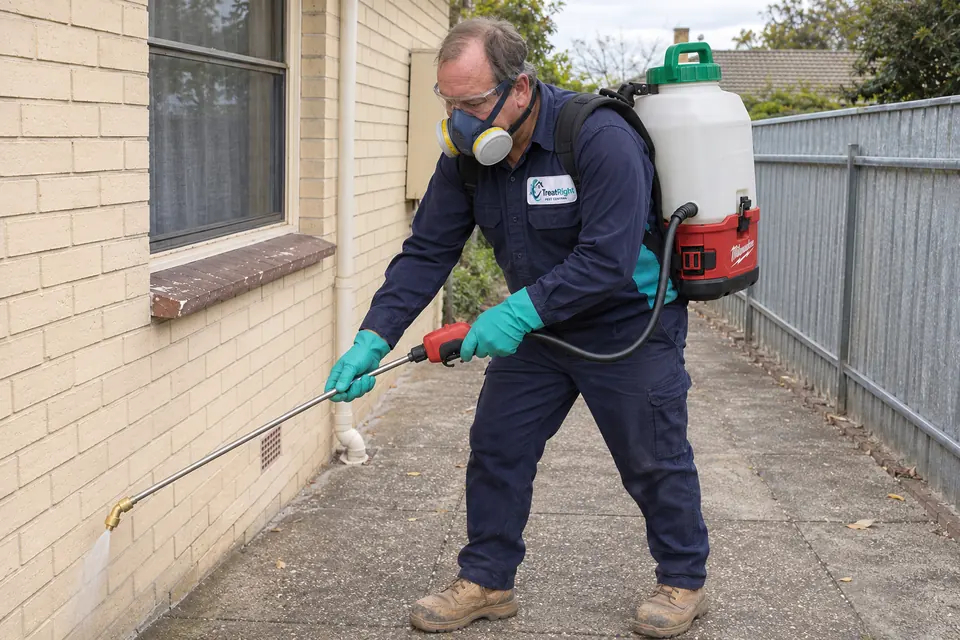
A scoped service may include assessment, targeted label-appropriate treatment of suitable harbourage, accessible web removal where agreed and exclusion advice. The quote should identify the pests and areas included. High eaves, fragile roofs, dense vegetation and shared property can restrict access. Those limitations should be recorded rather than hidden behind a whole-house claim.
Products have specific precautions and re-entry requirements. Tell the provider about children, pets, aquaria and sensitivities before the visit. Do not assume every product is harmless once dry. Follow the actual written directions for cleaning and access. New spiders can enter from outdoors, and visible webs are not a complete population measure. A useful follow-up process asks where and when activity occurs instead of automatically repeating a broad application.
Keep the service and the medical question separate
When requesting pest help, describe the observed animal, location and frequency. Ask for identification confidence, treatment boundaries, preparation and aftercare. If a medical concern prompted the enquiry, address that with a clinician as well. The pest visit does not establish the cause of a bite or guarantee that future bites cannot occur.
TreatRight’s intended Adelaide service uses independent local partners, with relevant licences and current insurance checked before allocation. This preview does not accept bookings or claim completed onboarding. National educational material does not imply field services across Australia. The proposed general pest scope may include nominated spiders only where agreed; any proposed service warranty (terms apply) remains subject to final written terms. Accurate facts, clear scope and sensible prevention are the foundation of a useful conversation.